The Ultimate Guide to Christian Homeschooling
Have you been considering homeschool? I wrote this Christian homeschool guide to cover the basics of making the decision to homeschool with a Christian focus. I hope that as you read it, it helps answer your questions and you decide to take the plunge and become a Christian homeschooler! You’ll never regret more time with your precious children! Let’s dig in!
Since this post is long, check out the table of contents if you’d like to skim it.
Backstory: How I Became a Homeschool Parent
As a former teacher, I am very familiar with early childhood education. I have spent years in the classroom teaching other people’s children. Although there are many parts of being a teacher that I absolutely loved, like the actual teaching part and the children and teachers that I was blessed to work with, there are also parts that I did not like at all. I knew as soon as my first baby was on the way that I never wanted to turn him over to someone else to raise. As a parent, I wanted to be the one to teach and raise my children and be there for their milestones. Becoming a parent is what made me realize that I wanted to be a homeschool parent.
My public school experience as a teacher and why we chose homeschooling
My experiences in public school as a student many years ago and as a teacher, about a decade ago, showed me various angles of public school. Although there are always going to be dedicated teachers that are a part of the system and can make certain experiences positive, the overall system is broken. There is a literacy crisis throughout this country due to failed teaching methods that have produced many who cannot even read.
Even when I was still in the classroom, so much time was dominated by state and district wide testing and an enormous focus on data and paperwork which took precious time from what mattered most, the actual teaching. Also, many times the teachers naturally want to teach and are good at it, but are constantly forced to implement new curriculum choices or strategies being pushed by the current principals or higher-ups that may not actually be effective, but they are the new trending idea so everyone must do them.
Countless other requirements are also put on teachers making their workload overwhelming and leaving them drowning in work while also trying to teach usually around 25-30 students. Time is continuously wasted while managing so many children. Things like standing in line for bathroom breaks, walking down huge halls to get from here to there, etc. are huge time wasters.
Also, many times the teacher has no choice but to sort of aim the lesson to the middle of the group so kids that are above average aren’t challenged and kids that are below average may not be getting the help they need. Differentiation of instruction is key here, but mainly prioritized in reading and math and only by the best teachers, likely not well done by all. The reality is, the small group or one on one instruction a child receives at home by a loving parent can go much farther and faster.
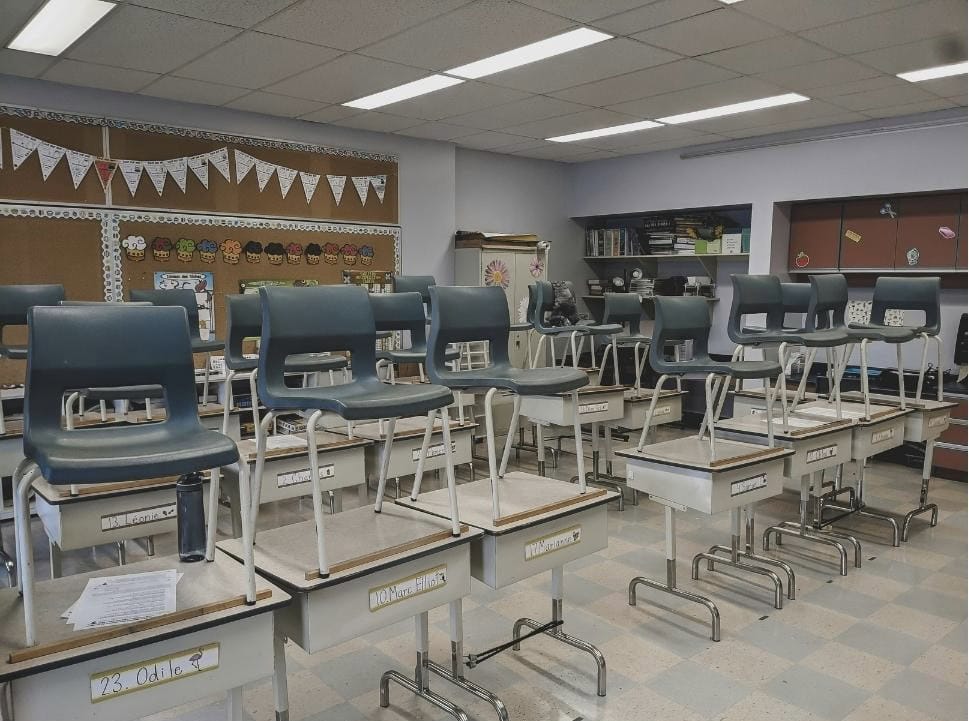
Although I definitely do believe that public schools are overall not a good system in our country right now, it’s deeper than that. Homeschool is a part of my mission to raise my children to love and serve the Lord. Every part of what they are taught is either supporting the Word of God or not. Public schools have removed God from instruction, and in a world made by Him, that is not correct and solid instruction. Having our children raised by other people and away from us all day where God isn’t allowed to be mentioned is not how I want them raised. As Christians, we need to have our children’s foundational education be based on the truth, the unchanging, living, and powerful Word of God.
Why you should choose Christian homeschooling

The Biblical Foundation for Homeschooling
“And these words that I command you today shall be on your heart. You shall teach them diligently to your children, and shall talk of them when you sit in your house, and when you walk by the way, and when you lie down, and when you rise.”
Deuteronomy 6:6-7
When you are homeschooling your children, you are able to disciple your children in faith. All day, as you teach, there are opportunities to direct their understanding of the world around them to God, to His purpose, and to the beauty of creation. The tidbits of knowledge that they gain when schooling are assimilating to what they already know.
All of this knowledge that they are gaining, whether in public schools or with you at home, is shaping their world view. Who do you want to shape the way your child sees the world? Would you like it to be you with the help of the Holy Spirit and the Word of the almighty God? Or do you want their world view to be shaped by the mix of perspectives in public schools, which may not always reflect your Christian values? Guard their hearts and minds and be sure that only the best information, which is in alignment with the Word of God is entering their minds.
Benefits of Christian Homeschooling
- When you homeschool, you can tailor you child’s education to align with your families Christian values.
- You can choose teaching materials that align with a Biblical world view, and teach your child to think critically about sources of information.
- Homeschooling allows you to incorporate character development in your homeschool, training up your children in the way they should go.
- When you are learning alongside your children, your children have stronger bonds with you and with each other, rather than spending so much precious time separated from each other.
Overcoming Doubts
Are you qualified?
- Absolutely you are! You are already your child’s teacher, whether you begin homeschooling or not. Your child watches your every move! So, do it now with purpose and conviction. Help them grow and learn on purpose. Not only are you qualified, but you are called. Homeschooling is not just education, it is a calling to train your children to love and serve God.
- It does not take any special qualifications for you to teach your children. I have them, but I am telling you, they are absolutely not necessary. You are definitely able to do this! Especially in this day and age, with so many resources at your fingertips (including the ones found here at titusmom.com), you can absolutely do this!
” Train up a child in the way he should go; even when he is old he will not depart from it. “
Proverbs 22:6
Will my kids miss out?
If you went to public school yourself, or if you are considering some positive aspects, I can see how you may be concerned that your child may miss out on certain opportunities to spend time around other children, etc.
Instead of thinking of what they may be missing out on, I want to challenge you to think of all of the amazing opportunities you and your family will have when you have the freedom that homeschooling will give you. You’ll be able to visit family more, go on vacations without worrying about a school calendar, and make play dates with friends at the park any time of day.
Think of all the wonderful memories that you will make with them with all of the extra time you have together when they aren’t away at school. It is such a blessing!
You’ll also be sparing them lessons that may not be in alignment with your beliefs as a Christian. Unfortunately, ideology that is not Christian at all runs rampant in many schools. In order to protect our children from influences that may pull them away from what is right, we need to educate them ourselves.
Laws about Homeschool
Understand your local Homeschool Laws
Since laws vary by state and by country, it is important that you become familiar with the law in your area. In the United States, the requirements for reporting homeschool are different depending on the state you live in.
You can search for your state on this page by the HSLDA. If you still need more information or do not live in the United States, a quick Google search should help you be able to find out what the requirements are in your own area. For legal guidance, check out the HSLDA (Homeschool Legal Defense Association).
Define Your Homeschool Vision
First and foremost, pray about your decision to homeschool and for God to guide you in it. Set goals for what you want to achieve. Consider academic goals, spiritual growth, character development, and personal goals for yourself and each of your children.
As a homeschooling mom of four, I like to think of goals at the beginning of each year, but I am also very flexible. I have learned that if I choose a certain thing to do and then realize it is not working as I planned, it is okay to switch things up as needed.
Choose a Homeschooling Style or Wing it and mix them all 😊
What is it called if you do this: make up your own curriculum by using videos, having discussions around field trips, current events, use some text books, use some workbooks, print worksheets found online or make your own, read chapter books, and write in journals, and read and discuss Bible verses?
This is the question I asked when trying to define my own homeschooling style. I never like to put myself in a box. We have a very flexible way of learning. After researching the different homeschooling styles in more depth, I have determined that my style is an eclectic style.
You can learn more about the homeschooling styles now and try to think about which one you think you like best.
Classical Christian
- Biblical worldview with the use of Scripture, and critical thinking skills
- Three stages of learning (Trivium): grammar, logic, rhetoric
- Uses great books to gain wisdom from the past with classic literature, history, and philosophy
- Example: Classical Conversations
Charlotte Mason
- Mainly uses “living books” which are engaging, quality literature sources and often written by one author with first hand experience rather than textbooks
- Faith is integrated with nature studies, the use of Scripture, and character development
- Highlights short lessons, narration, and a love of learning
- Well loved approach because it is gentle and emphasizes great literature
Traditional (Textbook-Based)
- Uses structured curriculum
- Looks like traditional school at home with Christian textbooks and workbooks
- Biblical Principles are integrated into the subjects such as science and history
- Liked by parents who appreciate the similarity to how they were taught in public school and the ease of following a textbook which has lessons laid out for you
Unit Studies
- Focus on a central theme of study and integrate multiple subjects into the theme for a period of time, before choosing a new theme/unit
- Use Scripture and Biblical topics
- Explore big ideas as a family from a Christian perspective
- Example: Gather Round Homeschool
Eclectic (My personal fave)
- Mixes and matches from multiple styles tailoring the education to the child’s needs and the family’s learning preferences
- Blend Christian curriculum with hands on activities and lessons you create yourself
- Flexible which allows the family to customize it for each child’s unique needs and learning styles
- Allows for deep dives into content and family exploration of topics
- Popular because it allows for structure along with creativity
Unschooling (Christian)
- Each child is unique and should learn in their own way and at their own pace
- Children are given freedom to discover and learn naturally
- Parents guide the child and model Christian values
- Learning happens through travel and experiences
Montessori Inspired Christian

- Uses the hands on and child led Montessori approach
- Aims to help kids develop skills that are useful in every day life called “practical life”
- Grace and courtesy are included
- Popular with parents who want a child led and hands on approach
The Support System

You can join groups online for Christian homeschoolers. If you’d like to see people in person, you could join local co-ops or set up field trips or play dates with other homeschoolers. You can meet people at church, the library, parks, and through your online support groups if you find a local online homeschooling group. These can be found on various social media platforms, so you’ll need to search in your area to find what works for you. You can also find support here at titusmom.com and you can interact in the comments sections and subscribe to stay in the loop with new resources and updates here.
Pick Christian Homeschool Curriculum
Main things to look for in curriculum
As a Christian homeschooler, it is very important that you look for curriculum that is in alignment with the Word of God. As I have heard Ken Ham (of Answers in Genesis) say, if it is not for God, it is against Him. Be careful to choose curriculum that supports your Christian world view and teaches your children in the right way.
Things to consider for curriculum:
- Biblical worldview (Supports a Christian world view and does not teach things that are against the Word of God)
- Age/Level: understand that your child’s grade level may not accurately represent your child’s current level in a particular subject. Aim to teach your child where they currently are, not where their age or grade says they should be. Aim for mastery before moving forward particularly in the 3 Rs (Reading, Writing, and Arithmetic).
- Budget: Consider the cost for a school year worth of a particular curriculum. You may want to price out everything that you would need for one year of homeschooling with any curriculum that you are considering and be sure that it fits within your budget before starting. You can also search for free or used curriculum if that helps you make it work. Don’t worry, there are many ways to save money and it does not have to be expensive to homeschool.
My Christian Curriculum Recommendations
- FREE Printables from titusmom.com
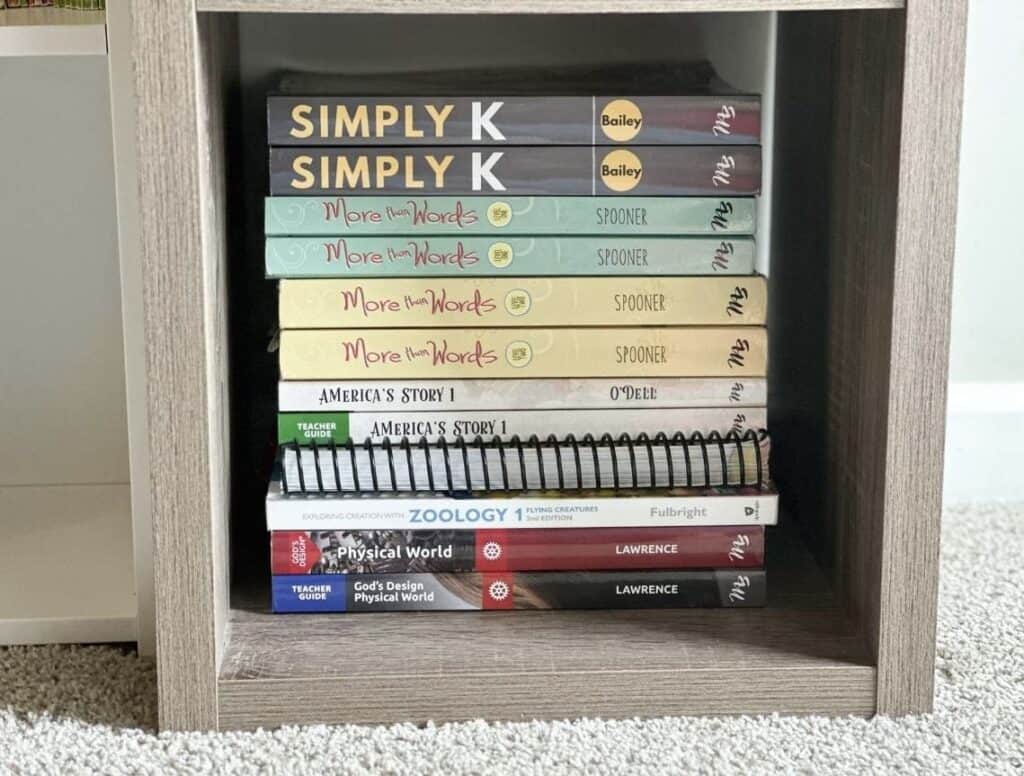
- masterbooks.com (as a place to shop for various Christian curriculum)
- allinonehomeschool.com (FREE)
- Gather Round
- Apologia Science
- Elementary Science books from masterbooks.com
- America’s Story from masterbooks.com
- Simply K from masterbooks.com (works better for 3-4 year olds for me)
Other Teaching Resources that I like to use:
- Spectrum Math Workbooks
- Teach Me Reading
Teaching straight from the Bible
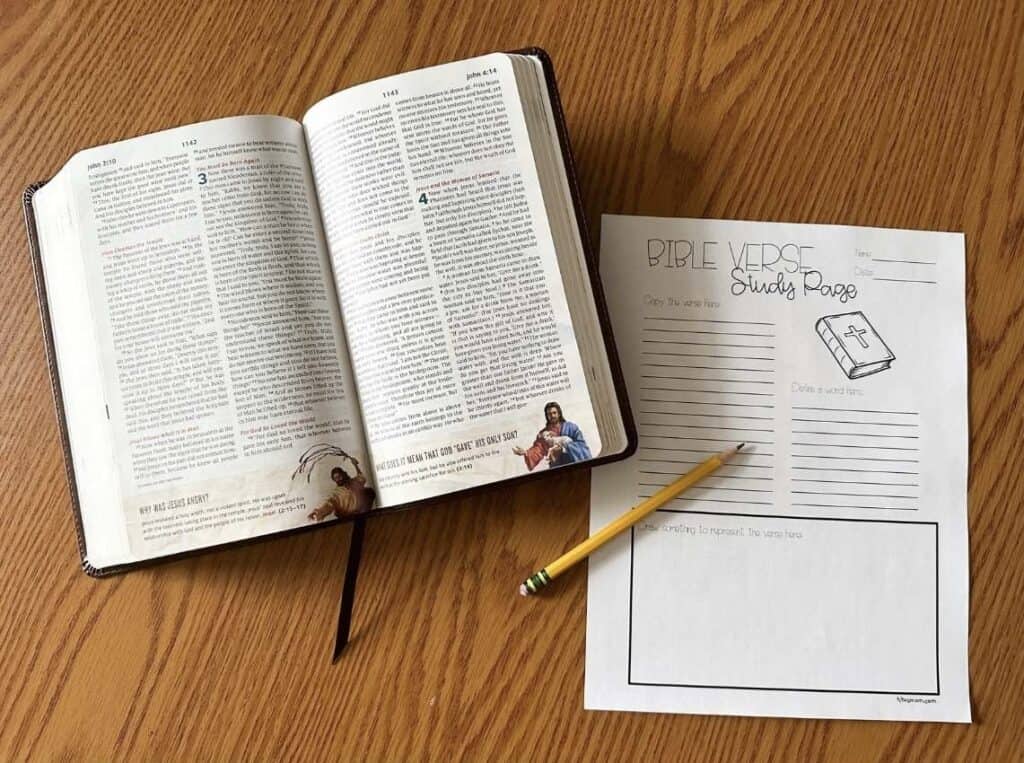
The Bible is an excellent source of instruction. You can study the Bible as one of your core subjects and pray and ask the Lord to guide you in your studies. You can also use it for reading material and have discussions around what is happening in various parts of the Bible and what God is teaching us through it. The Bible is an amazing Christian homeschool resource. You can use it for Bible lessons, reading fluency, comprehension, and for copywork. You can also have your children memorize Bible verses.
For centuries, the Bible has been used to teach from, not just for religious purposes, but for educational purposes. It was a place to learn to read and write as well as learn about serving and honoring God.
You can have amazing discussions with your kids when reading the Bible together. The Bible is also full of amazing vocabulary and is a great way to help your child to grow in their Biblical understanding, but also in their reading, writing, and critical thinking abilities. In fact, it is the single most important text for all of humanity and for Christian homeschoolers.
Ways to use the Bible in Christian Homeschooling
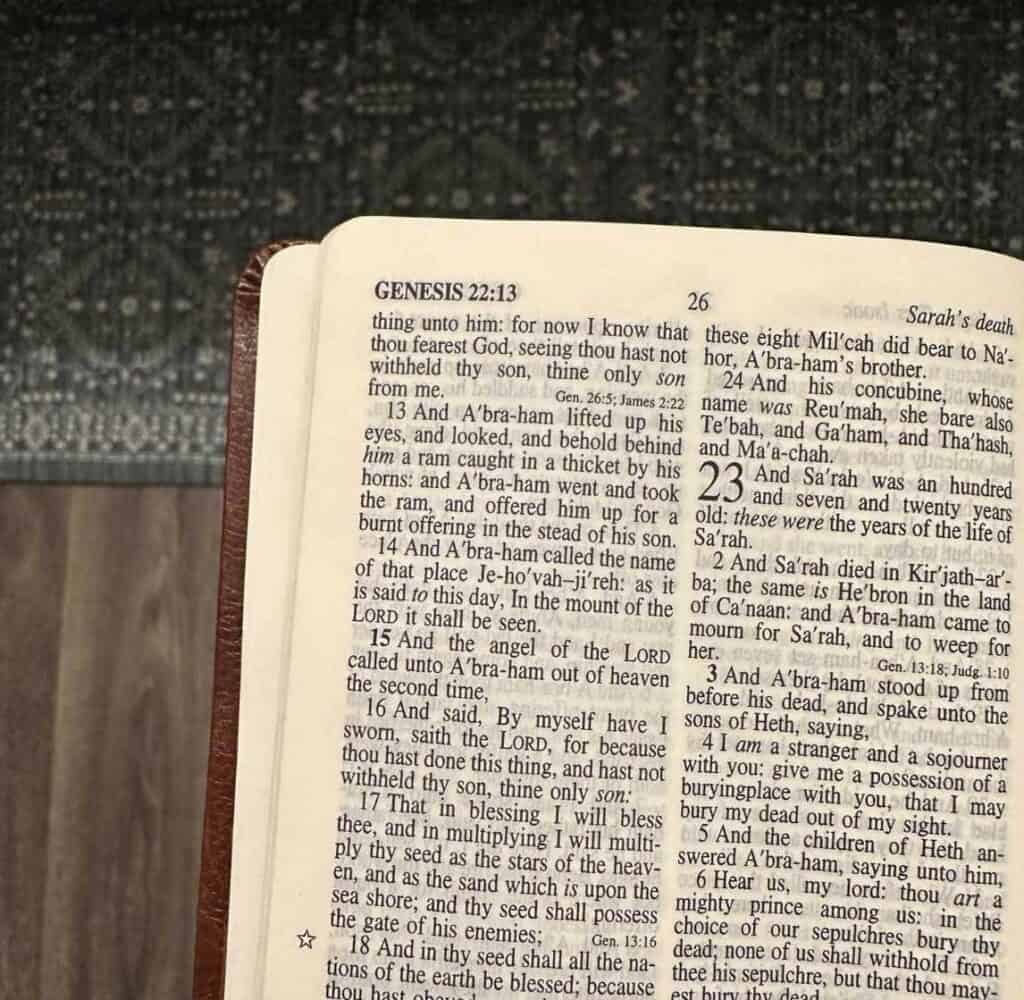
- Have young children illustrate major Biblical historical events.
- Discuss the people of the Bible and their experiences.
- Learn wisdom through studying Proverbs
- Read and create lists of new words and then find the definitions of those words and use them in new sentences.
- Read a story, section, verse, or chapter from the Bible and write a response to it. Write about what you’ve learned from it or how it applies to your life.
- Create a timeline of Biblical events.
- Find places in the Bible on historical or current maps.
- Create 3D projects displaying scenes from historical accounts found in the Bible.
- Read sections of the Bible aloud and create audio clips and then listen back and check your own fluency. Find and correct errors.
- Create videos retelling certain sections of the Bible.
- Compare and contrast different translations of favorite Bible verses for a deeper understanding, such as KJV vs ESV.
- Create a physical representation of something biblical, such as the armor of God as described in Ephesians, chapter 6.
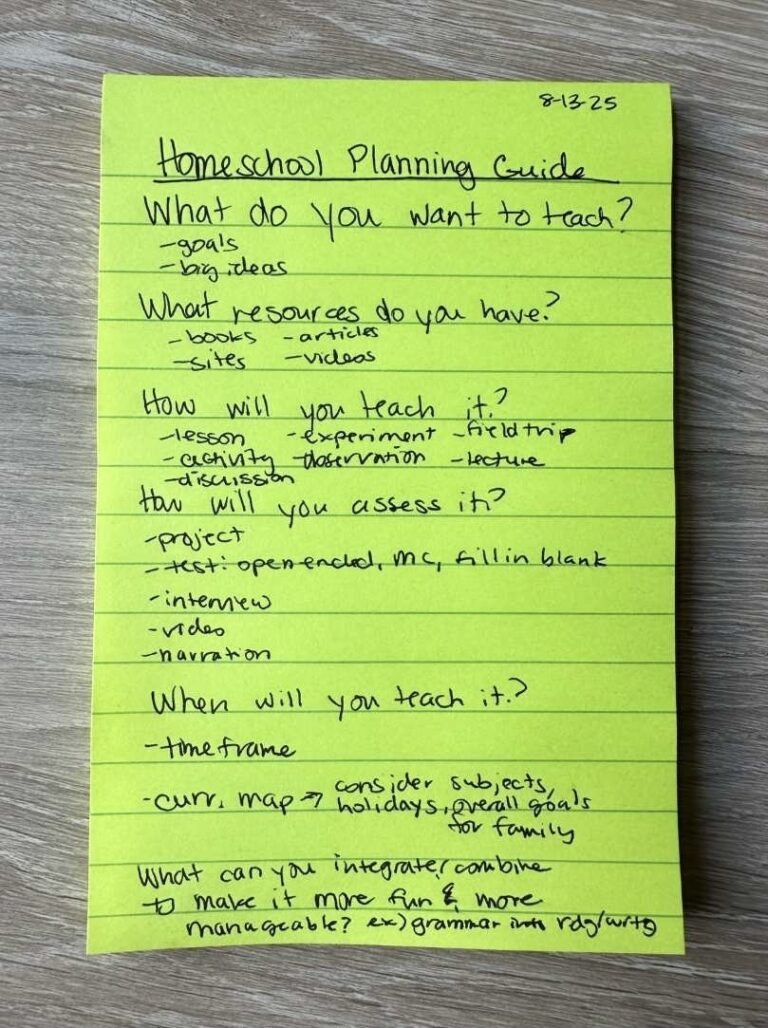
How to make your own homeschool curriculum
1. Set goals for the year
You make your own homeschool curriculum by first deciding what is most important to you for that child, for that year. For example, if you have a kindergartener, the most important goal might be that they learn to read, so you’ll want to focus the most attention on that goal.
2. Decide on a Basic Homeschool Routine
Decide which subjects you’ll teach and when. For example, if you’re teaching six subjects: Bible, Reading, Writing, Math, Science, and Social Studies, you can decide if you’ll teach all six daily or if you’ll do the 3 Rs daily and then the other subjects every other day or some other variation of that.
3. Use a variety resources to create a custom curriculum
Choose resources that align with your goals. You can pull from a variety of resources to customize the curriculum for your homeschooler. Maybe for Bible you read from the Bible, for reading your child reads for 30 minutes from a chapter book and you discuss, for writing you alternate between grammar focused days and writing essays, for Social studies you find a textbook you like, for science you prefer hands on experiments that you research as you decide what to teach. Maybe for math, you follow a workbook. You can totally change these things at any time and adjust. You can check standards listed online for ideas of what to teach each year but you absolutely don’t have to follow them. They can just be a point of reference.
4. Reteach over the long haul
Know that you will be reteaching concepts many times over the years. For example, if you teach how plants grow from a seed in kindergarten, that doesn’t mean you’ll never need to teach it again. So your child doesn’t have to have it perfectly memorized, since you’ll be teaching it again over the years as they get older. The prior knowledge that you’re building by teaching it now, will help it stick in their brains when they hear about it again later. New information attached to older information to aid in learning. So build up those knowledge stores in the early years
5. Track progress & teach in a variety of ways
Note progress. If your kids are learning and making progress across the different subject areas and especially in Bible, Reading, Writing, and Math, you’re doing a good job. Things do not have to be taught only one way. You can teach through in person experiences (like field trips AKA vacations), hands-on activities, videos, read alouds, and so many other ways, but be careful not to neglect the most simple ways, like with pencils and paper. Make sure your child is working because that is when they are learning. Make them an active participant, not a passive observer.
Use Routines to Keep the Home Running Smoothly While you Homeschool
Flexibility is necessary to balance it all
As a Christian mom, influenced by Titus 2, we are balancing so many responsibilites in our home. We know that loving our husbands and children each day is so important and that includes having a clean home, fresh laundry, and healthy meals on the table. It is important to have daily routines and rhythms that keep this work going. Keeping your homeschool routine flexible as you balance these routines will really help you to not stress over details. Just keep the big picture on track.
Routines, Routines, Routines
At first, establishing the routines feels like very hard work, but with dedication and consistent implementation, the routines seem to do themselves. You will find yourself naturally running the laundry as you walk by the laundry room and wiping down the counters without much thought. It is very important that you get a handle on the routines of running your home efficiently, to free up your brain for homeschooling and other things that you need to get done.
Have kids help
Do not be timid about getting your kids to help. This is part of their home education too, preparing them to be adults with basic life skills. It will help them and you when they are taught from an early age to clean up their own messes, fold and put away their clean clothes, and clean up their areas at the table when they are done eating.
A clean, organized space to learn is important
All of these areas affect your ability to homeschool well. You need a clean and organized space to live and learn. For me, decluttering helped a lot, particularly when children are very young and unable to maintain large quantities of toys neatly. It also is a huge help to use the FlyLady system, including her app. You can use the checklists that she has in the app and customize them for yourself. You can even create one for your homeschool to-dos. This is so helpful for being consistent each day.
Sample Daily Schedule: an idea of how to do homeschool each day
Morning Routine
- Bible time on your own (Mom models this and encourages kids to do the same)
- Everyone gets dressed for the day & eat breakfast
- Beds made, swish & swipe bathrooms, start laundry, take out trash, empty dishwasher (inspired by FlyLady here… who I love and highly recommend)
Homeschool Routine
Check this sample routine of how to do homeschool by subject. Choose the subjects or subject that you want to cover that day. You can do a little bit of every subject every day, or you can choose to do different subjects on different days. It is all up to you. I advise that Bible, Reading, Writing, and Math should be done daily. Science and Social Studies can be done daily, but if other work has been heavy, you can alternate Science and Social Studies or have days where you focus more on those.
Sample Daily Schedule (For those who want an idea, but you do NOT have to be this rigid with times):
- 9:00- 9:30 Breakfast
- 9:30- 10:00 Bible Lesson
- 10:00- 10:30 Reading with Mom
- 10:30-11:00 Reading on Your Own
- 11:00-11:30 Snack
- 11:15-11:30 Writing with Mom (quick lesson)
- 11:30-12:00 Writing on your own
- 12:00-12:30 Kids play and mom cooks lunch
- 12:30-1:00 Lunch
- 1:00-1:30 Math
- 1:30-2:00 Science
- 2:00 – 2:30 Social Studies
- 2:30-5:00 Free play (maybe park or outside)
- 5:00-5:30 Kids do their helper jobs and mom cooks
- 5:30-6:30 Eat and cleanup kitchen
- 6:30-7:30 Bath time for kids
- 7:30 – 8:00 Family Bible time
- 8:30 Bedtime for kids
- No later than 12am Bedtime for parents
Evening Routine
- Check your calendar and have a general idea of tomorrow’s top to-dos
- Family Tidy Time, get all hands on deck to quickly pickup and reset the house to be ready for tomorrow
- Wipe down kitchen counters, run dishwasher, sweep ( if not already completed)
- Wash face, brush teeth, baths for all
- Go to bed at a bedtime that is reasonable and aim for consistency here for your own bedtime and for kids’ bedtimes
Tips for Managing Multiple Grades
- Set up areas around where you teach for kids to do independent work. For example, when your older children are reading silently, you can let them read in a nearby cozy spot while you work with the younger ones to learn letter sounds.
- Try to teach subjects as a whole group. When teaching subjects like science or social studies, you can read content aloud to the entire group of all ages and discuss the concept and answer questions all as a group. When it is time to do a related assessment, you can make it appropriate for that age. For example, if your older child is required to and=ser written questions about a topic, maybe your pre-k aged child will just draw a picture and answers basic questions aloud.
Tools for Scheduling
I find the FlyLady app to be a very good tool for helping me to keep up with what I need to be doing. You can also use your timer on your phone and set alarms that are labeled and go off at the same time each day or on certain days of the week to keep you on track.
Christian Instruction in Homeschool
Daily Bible time and Prayers
You can do this during your daily Bible time as a family. Read a verse or have the Youversion Bible app read aloud a chapter per day from the Bible to your kids. You can also use the verse of the day feature in the app and play the short video to learn more about the verse. Next, sing worship songs, and take turns praying. Then, pray a nightly prayer as a group.
Teaching Biblical Values Across Subjects
No matter which subject you are teaching, bring it back to God when you can and show your children how He is a part of everything we do. With history, discuss things like how our country was founded on Christian values, or how various Christians became important historical figures. In science, you can explore creation. In literature, you can discuss characters and their actions and if they were behaving as Christians should or not. God and faith-based topics should be integrated into your teaching across various subjects.
Memorizing Scripture
Memorizing scripture is so important and easy to do. When you continually review verses, which you can do during your Bible lesson time or during your family Bible time, you help your child to hide these verses in their heart. This will help them to be prepared for the spiritual battles they face in the future with the sword of the Spirit, which is the Word of God. You can use my ABC Bible verses free printables to help with this.
The Hard Parts
Managing Burnout

It is a lot. Trust me, I know. You have a lot in your plate as a stay at home mom, who is also homeschooling! Just do your best each day and do not beat yourself up. Make sure you rest, eat, and take care of yourself. Check out my self-care post for more information on this. When you take care of yourself and take occasional mental health days, you’ll be able to keep enjoying the homeschool process. Let it be easy and let it be fun. You’ve got this!
Teaching Multiple Ages
You may find yourself with a newborn or young toddlers while homeschooling older kids. I have been there, it’s tough, but you can absolutely do it. Use whatever tools you need to make it a bit easier on yourself. Tools like: workbooks, videos (supervised ), and learning games can help. You may be using more workbooks than you’d like or not making the cutest Pinterest worthy crafts every day, but that’s okay. Just make sure your kids are still learning consistently and give yourself grace.
With younger children, like toddlers, try to have activities for them to do as well. Open ended toys like Legos or blocks are great for those old enough. You can just let them form to the table with blank paper and crayons, usually at about 18 months, they’re ready for that. They can listen to your read alouds at any age. Incorporate your younger kids as soon as possible. While they’re still napping, you can take advantage of nap times for delete instruction with the older ones.
Nurturing Social Growth through Homeschooling
Social skills are developed through experiences around people of various ages and in various places. Homeschool is having your children in the real world with you. A lot of time is spent in the home, but you can plan a variety of outings and field trips to enhance your homeschool experience. Even just everyday life activities that you may not even be thinking much about like shopping for groceries or eating at a restaurant are opportunities for your child to interact with other people and develop their social skills.
Another huge part of developing social skills is time with family and friends. In current times, it seems that many people live far away from their families or don’t get together enough. Not being restricted to a strict public school schedule allows for more opportunities to visit family. Kids can learn from their grandparents or their aunts and uncles that they may miss out on precious opportunities to spend time with if they’re stuck in a classroom.
Stay Motivated
Each new school year, assess where your kids are and where they need to go. Set goals and check in at the end of the year to see how much you accomplished of the previous year’s goals before setting new ones. Get excited for what’s coming up that year by picking out curriculum or lesson ideas that you and your child are excited to learn about!
Resources and Tools for Christian Homeschoolers
Free and Affordable Resources
- Free Homeschool Worksheets here on titusmom.com
- allinonehomeschool.com
- Look on Teachers Pay Teachers for free resources
- Gather Round Free section
- khanacademy.com
Books and Blogs
- momdelights.com is a great blog to check out from a homeschooling mom of 15 who shares her advice
Online Communities
- There is a community on X.com called “Christian Homeschoolers”
- There are Facebook groups for Homeschoolers
- You can search for other online communities on whichever social media platform you use or prefer
Apps and Tech Tools
- Download the Fly Lady app for managing daily routines and rhythms
- Download the Youversion app for help with Bible lessons or Daily Bible Time
- Download Google Keep to have a place to organize brain dumps
Encouragement for the Journey
God will help you do this. Seek Him, put Him first, and submit yourself FULLY to His will. He will make a way and He will help you. It may feel overwhelming at first, but you were made for this. You were given these children as a blessing by the Lord. You are their mama and you are equipped to teach them. I hope this has helped you learn how to do homeschool each day. Use the resources you have and go for it!
What are you most excited about in your new homeschooling journey? Let me know in the comments below!