Teaching Early Math in Homeschool
Early Foundations in Math
Teaching math in homeschool with my kids really all begins in the very beginning as a little itty-bitty babies. We’re counting things when we’re doing our earliest read-alouds. Those early reading times are going to include small board books that allow the kids to skip to the next one, so we start with board books that allow the kids to count things.
I’m thinking The Very Hungry Caterpillar by Eric Carle, where you’re counting the things that the caterpillar eats. There’s another book that’s good for early counting, 10 Black Dots, and there’s different things that you can count, like pretend that the dots are, and you count the dots. There’s Bedtime in the Jungle book where you count the different animals that are going to sleep.
These are books that we read early on to count with. We also just count stuff in everyday life—when we’re driving in the car and things like that—just get them used to counting and talking about numbers before they’ve ever even sat down for a homeschool lesson.
First Lessons
Once they’re sitting down for their first lessons, we wouldn’t even go straight into the actual math as much as just numbers—like having them trace numbers, having them try to write numbers, and then having them count objects and match the numbers to the objects.
Then we start with very simple early workbooks. You can get workbooks from Target Dollar Spot or Walmart or Amazon that are just pre-K level books or for very young kids. This Spectrum Pre-K Math workbook is a good one that I’ve used for about ages 2-4. For those books, we would let them just try to do what they can do.
Some of it might be too hard for them, and that’s okay if they don’t do it all exactly to the directions, but as long as they’re trying, and they’re doing it, it’s still helping them so that you can do it with them, or you can just let them go for it—whatever they’ll do—and they’ll get better and better.
Transitioning to Addition and Subtraction
Once they’re really comfortable with counting and writing numbers and things like that, it’s just kind of going to come naturally that you’re going to start talking about adding. You might be eating one day and be like, “Oh, you have three M&Ms, and I’m gonna give you two more. How many is that?” and see if they can tell you that it’s five M&Ms. So you just kind of start talking about adding and subtraction in those kinds of ways.
Then you can sit down at the table and actually have them subtract and teach them what signs mean. You would show them, like, “3 + 2 = 5,” and you would actually just write it out and teach them that this “+” means that we’re adding more, and this “=” sign means that they’re the same on both sides. You know, this is an equation. So just teach them these math words like “equation” and “addition” and “subtraction,” and incorporate the math vocabulary into your daily life.
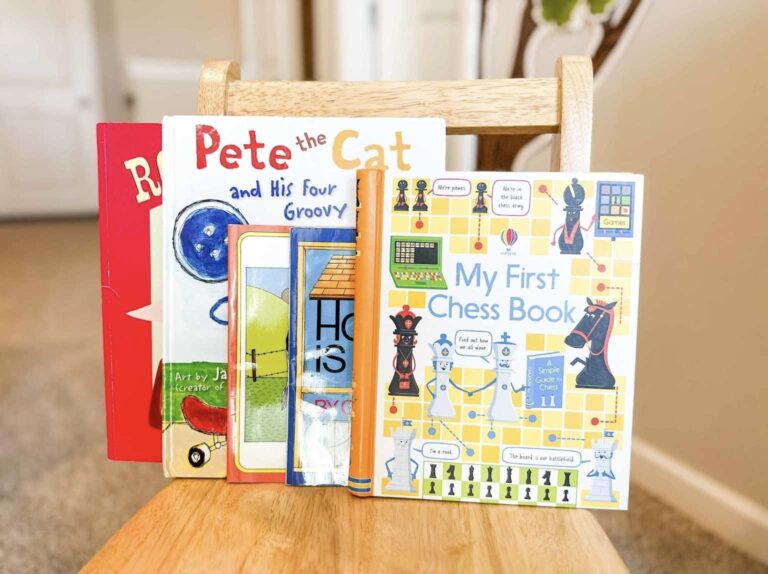
There are also great books to help with introducing equations. One we love is, Pete the Cat and His Four Groovy Buttons. In the book, Pete continually loses his buttons, and it shows equations each time to see how many he has left.


Pete the Cat and His Four Groovy Buttons
But also sit down sometimes and just make an equation for what just happened and show them how it looks on paper so then they’re going to connect the real-life experience with what you just wrote down on that paper. If you do that again and again, it’s just going to come so naturally that when they do the workbook, they already know what to do, and it should start going with the addition and subtraction.
Balance Pencil and Paper and Hands-On Learning
You’re going to have them add and subtract for a while through those simple workbooks, and if you just choose a line like a workbook that you like—I personally like the Spectrum workbooks for math—you could just start working through those as soon as they’re ready.
It doesn’t always have to be a workbook thing when you’re teaching math in homeschool. Sometimes you can do hands-on lessons and talking about it and other times you can do workbooks. Some kids work better with one over the other, but I think you should always do workbooks or worksheets sometimes because they do need to know how to do pencil-and-paper as well as using math in daily life. So I think it’s good to have both, you want to have balance.
Moving on to Harder Math Concepts
This is just for the very basic part when you’re teaching number recognition, writing, tracing numbers, addition, and subtraction. As they keep going through the workbooks, they’re going to start getting beyond to adding and subtracting bigger numbers.
So then you’re going to have to teach them things like regrouping. It’s going to be important that they understand place value and the base-10 system that our numbers are based upon. Most workbooks are going to teach you these basic things, that’s why I think it’s good to just follow a workbook.
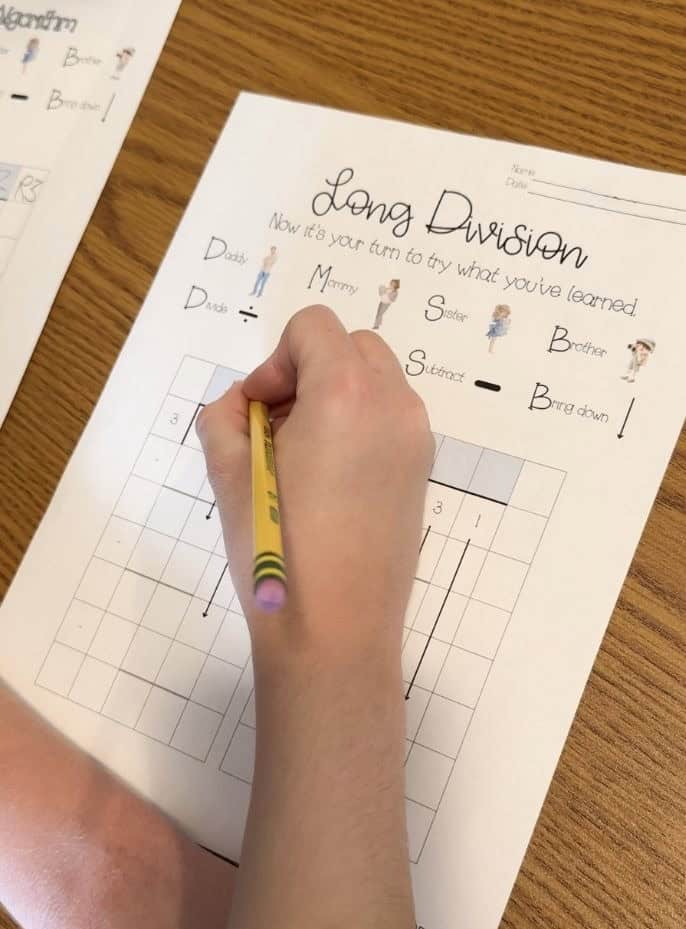
You’re also going to do multiplication and division, so same thing—you really can demonstrate these in daily life and then show an equation to go with what you just demonstrated. For example, let’s say we made 24 cookies, and we’ve got six people in our family. How many cookies does each person get? You can demonstrate it with an example and then show how that looks on paper.
Once you get beyond this, now you’re getting into, like, fifth grade or so. At that point, the math is definitely going to start getting more complicated, and it’s probably good to have a curriculum that you’re just following for these more intense math concepts. Hopefully this general overview gives you an idea of how to get started. How are you getting it done? Let me know in the comments.